Unique Homes MA
South End Italianate Rowhouses
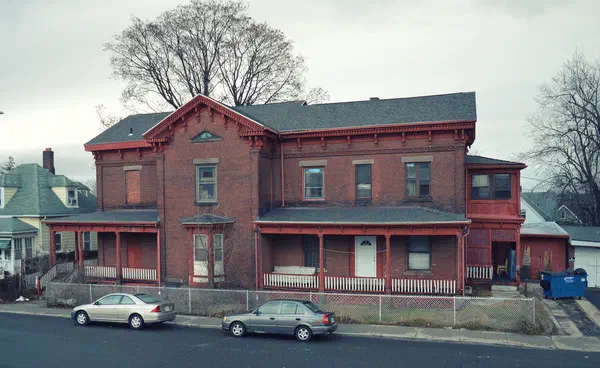
The South End Italianate (1850-1885) is Boston's middle-class Victorian rowhouse — Italianate-bracketed brick or brownstone-trimmed houses on a square-grid neighborhood that was the largest single Victorian-era district in America.
What is a South End Italianate?
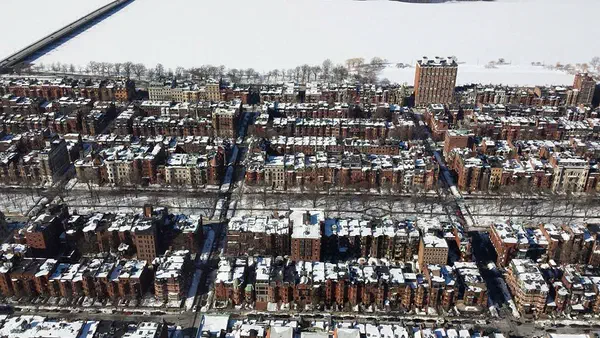
The South End Italianate is Boston’s classic Victorian rowhouse, built between about 1850 and 1885 on land reclaimed just south of Boston Common. The neighborhood went up before the Back Bay, on a grid dotted with small parks, for merchants and professionals on their way up. These are tall brick houses, three to four stories, usually trimmed in brownstone and packed shoulder to shoulder. The look is Italianate, with bracketed cornices and tall arched windows. The South End is the largest Victorian rowhouse district left in America. It had a long rough patch from about 1900 to 1970, but since the 1980s it has become one of Boston’s most sought-after addresses.
Why it’s special
The signature is the bay front: a curved bay that swells out from the brick face and rises the full height of the house, and whole blocks of them curve down the street together. Look up and you see the brackets, carved wooden scrolls that hold up the cornice, and arched stone hoods over tall, narrow windows. Some 1870s blocks have a steep mansard roof. A high front stoop with cast-iron railings lifts the parlor floor above the sidewalk, and almost everywhere the houses face a small park.

What it’s like to live in one
Most South End houses were long ago divided into two to four condos, so what you usually buy is a piece of a rowhouse. A parlor-floor unit gets the grand front rooms and tall windows; a top-floor unit may come with a roof deck. This is full city living, with restaurants, galleries, and the green of your square right out the door. The tradeoff is tight parking and high prices. Behind the handsome brick you may find old heating and wiring, so read the condo records first.
Is it the real thing?
The close comparison is the Back Bay brownstone next door. The two were built around the same years in the same style, so people mix them up. The tell is the material: a South End house is brick with brownstone trim and faces a small park square, while a Back Bay house is faced entirely in brownstone. For a classification we require an address inside the historic district plus a build date before about 1890, with MACRIS confirming a building’s age.
Last reviewed
Common questions about South End Italianate homes
How do you identify a South End Italianate home?
- Brick facade, usually with brownstone trim, on a 3-4 story rowhouse
- Bracketed cornice under the roofline
- Arched window hoods over tall, narrow windows
- High front stoop with cast-iron railings
- Bowfront (curved bay front), flat front, or angled bay
When were South End Italianate homes built?
South End Italianate homes were built during 1850–1885.
Where in Massachusetts are South End Italianate homes found?
- South End (Boston) — exclusively, ~500-acre district bounded roughly by Mass Ave, Tremont, Berkeley, and Albany Streets
- Bay Village (Boston) — smaller adjacent district with similar building stock
- Charlestown — scattered Italianate rowhouses share some vocabulary
Who designed notable South End Italianate homes in Massachusetts?
- Most houses are builder-designed; pattern books drove the form
- John R. Hall — many South End commissions
- Bryant & Gilman (Arthur Gilman, who also laid out the Back Bay) — early South End surveys and architectural patterns