Unique Homes MA
Original Cape Cod Houses in Massachusetts
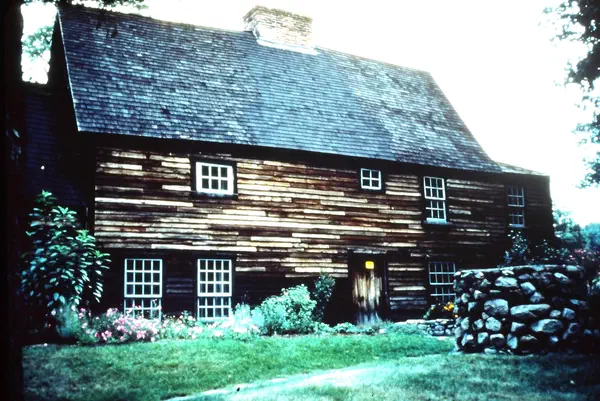
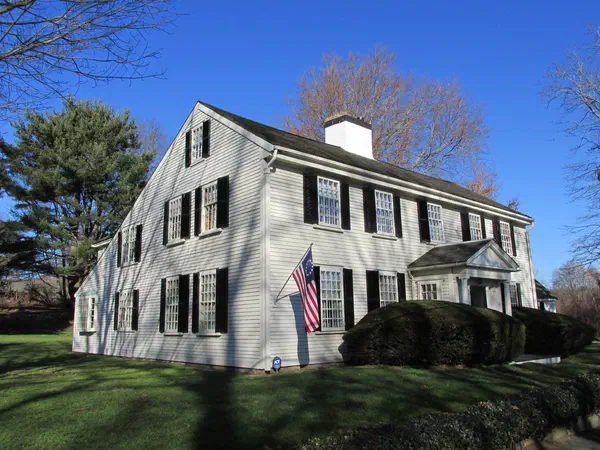
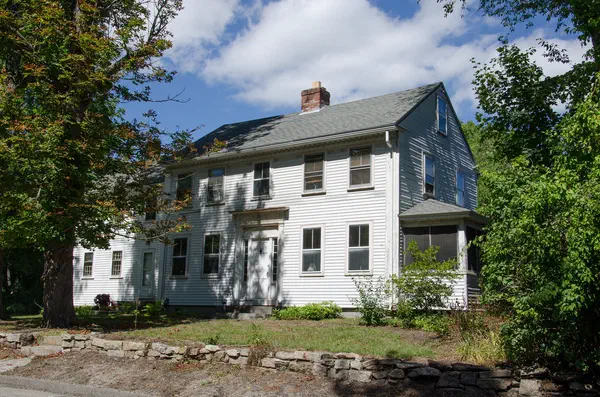
The Cape Cod cottage — the most-imitated American house — originated on Cape Cod and the Massachusetts South Shore between 1700 and 1850. Authentic 18th- and early-19th-century Capes survive throughout the region.
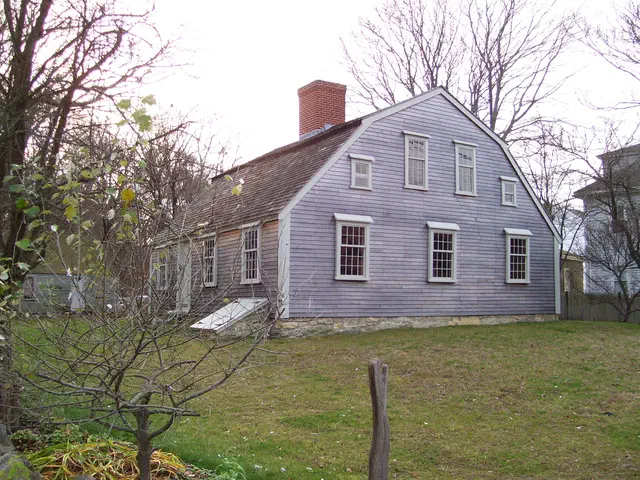
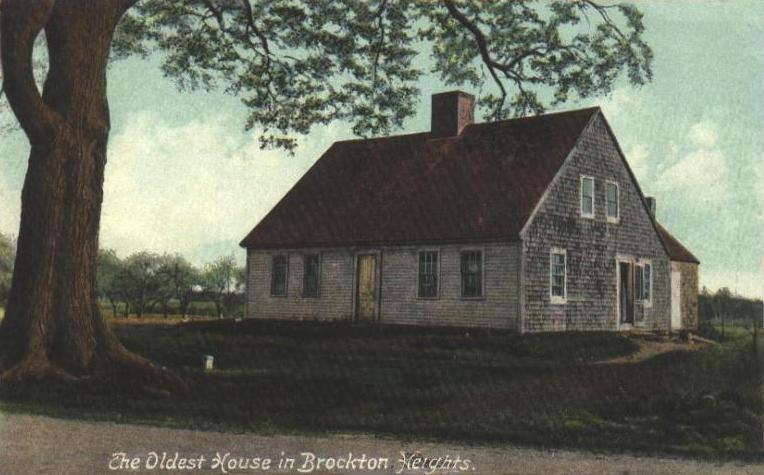
What is a Cape?
The Cape is the small, steep-roofed cottage that became the most copied house in America. It started here, on the Massachusetts coast, around 1700. A true original Cape is roughly three hundred years old: a low, snug house built by hand around a great brick chimney to carry a family through a New England winter. Its close cousin, the saltbox, adds a long sloping roof over a rear lean-to. Most houses sold as “Cape Cod” today are 20th-century copies, so the real thing is rare.
Why it’s special
A Cape was built to last and built to grow. Many families started with half a house, then added on as they could afford it, so you can still read that story in old Capes: a wing here, a room there, each added a generation apart.

At the center of every Cape is the chimney and its hearth. Before furnaces, the fireplace was the kitchen, the heat, and the gathering place, and the whole house still leans toward that warm middle. Wide pine floorboards, low beamed ceilings, and small wavy-glass windows are the marks of a home made one board at a time.

What it’s like to live in one
Capes are cozy and intimate by design. Ceilings are low, rooms are modest, and the light is soft. The people who love them love exactly that: a house that feels gathered around you, full of character no new build can fake. They sit in some of the most walkable historic villages in the state. Cape Cod has the densest supply, in towns like Barnstable and Chatham, while the South Shore (Hingham, Cohasset) and Cape Ann have their own, often at higher prices. Going in, expect to update the heating, wiring, and plumbing, and to budget for the upkeep an old house asks for.
Is it the real thing?
True Capes are rare and the “Cape-style” look is everywhere, so the difference can mean a large premium on the same street. A genuine original is pre-1850, almost always older in eastern Massachusetts, with the central chimney and a handmade frame. A revival is 20th-century, usually with end chimneys or none. For a listing to be classified as an original Cape on this site, we require a build date before 1850 plus independent evidence: an “original” note in the listing, a historic-survey record, or an assessor record of pre-1850 construction.
Last reviewed
Common questions about Original Cape homes
How do you identify a Original Cape home?
- One or 1.5 stories, never a full two
- Steep gable roof running the length of the house
- Large central chimney serving several fireplaces
- Symmetrical (or half-symmetrical) front around a center door
- Small, multi-pane windows
When were Original Cape homes built?
Original Cape homes were built during 1700–1850 (originals); revivals 1920+.
Where in Massachusetts are Original Cape homes found?
- Cape Cod — Barnstable, Yarmouth, Dennis, Chatham, Brewster, Eastham, Wellfleet, Truro
- South Shore — Cohasset, Hingham, Plymouth, Marshfield, Duxbury, Scituate
- Cape Ann — Rockport, Gloucester, Manchester-by-the-Sea
Who designed notable Original Cape homes in Massachusetts?
- Anonymous master carpenter-builders working in vernacular New England traditions
- Pattern-book influences appeared late (post-1830): Asher Benjamin's "The American Builder's Companion" (1806) influenced trim on later Capes
- Royal Barry Wills (1895–1962) — not an original-Cape architect but the most influential Cape Cod revival designer; his work imitated and popularized the form
Current listings (34)
For Sale
c. 1780
$1,494,000
410 Main St
Dennis
5 bds | 3 ba | 2,132 sqft | Built 1780
MLS ID #73504624, William Raveis Real Estate & Homes Services
For Sale
$1,000,000
1296 Tremont St
Duxbury
5 bds | 3.5 ba | 3,874 sqft | Built 1660
MLS ID #73537059, Coldwell Banker Realty - Duxbury
For Sale
$1,199,000
37 Neds Point Rd
Mattapoisett
6 bds | 2.5 ba | 2,317 sqft | Built 1802
MLS ID #73503987, Demakis Family Real Estate, Inc.
For Sale
$499,000
366 Winslow Gray Rd
Yarmouth
3 bds | 2 ba | 1,155 sqft | Built 1800
MLS ID #73494522, Kinlin Grover Compass
For Sale
$549,000
38 Landing Rd
Kingston
3 bds | 1 ba | 1,692 sqft | Built 1850
MLS ID #73502667, William Raveis R.E. & Home Services
For Sale
$619,900
34 Trenton
Dedham
3 bds | 1 ba | 1,292 sqft | Built 1812
MLS ID #73531959, RISE REC
For Sale
$685,000
178 School St
Dennis
3 bds | 1.5 ba | 1,456 sqft | Built 1873
MLS ID #73535907, Bo Murphy Real Estate Company, LLC
Under Contract
$1,100,000
100 Clapp Road
Scituate
3 bds | 3 ba | 2,372 sqft | Built 1785
MLS ID #73533541, William Raveis R.E. & Home Services
For Sale
$675,000
15 Carver St
Halifax
3 bds | 2 ba | 2,144 sqft | Built 1730
MLS ID #73531477, Keller Williams Realty Colonial Partners
For Sale
$640,000
1015 Hortonville Rd
Swansea
4 bds | 2 ba | 2,027 sqft | Built 1802
MLS ID #73523179, The Greene Realty Group
For Sale
$540,000
110 Center St
Plympton
4 bds | 2 ba | 1,585 sqft | Built 1840
MLS ID #73533489, Coldwell Banker Realty - Belmont
For Sale
$940,000
417 Commerce Rd
Barnstable
3 bds | 1 ba | 1,418 sqft | Built 1680
MLS ID #73534081, William Raveis R.E. & Home Services
For Sale
$639,999
68 High Street
Northbridge
3 bds | 2 ba | 2,593 sqft | Built 1890
MLS ID #73533536, Lindsey Sarah Realty Group
Under Contract
$327,500
162 Nash Rd
Cummington
2 bds | 1.5 ba | 1,512 sqft | Built 1777
MLS ID #73530018, Delap Real Estate LLC
Under Contract
$749,000
6 Cross St
Buckland
3 bds | 2.5 ba | 2,184 sqft | Built 1820
MLS ID #73529892, Coldwell Banker Community REALTORS®
For Sale
$995,000
622 Spencer Rd.
Oakham
3 bds | 2 ba | 2,202 sqft | Built 1770
MLS ID #73531264, Century 21 North East
Under Contract
$425,000
266 Turners Falls Rd
Montague
3 bds | 1 ba | 2,310 sqft | Built 1800
MLS ID #73527220, Keller Williams Realty
Under Contract
$999,000
86 N Main Street
Sherborn
3 bds | 2.5 ba | 2,686 sqft | Built 1833
MLS ID #73526227, Rutledge Properties
For Sale
$815,000
45 Taylor St
Pembroke
3 bds | 2 ba | 2,488 sqft | Built 1740
MLS ID #73525141, Keller Williams Realty Signature Properties
For Sale
$1,195,000
31 Main St
Marion
3 bds | 2 ba | 1,935 sqft | Built 1821
MLS ID #73520843, Demakis Family Real Estate, Inc.
For Sale
$775,000
627 S Franklin St
Holbrook
5 bds | 1.5 ba | 2,324 sqft | Built 1735
MLS ID #73521427, The Firm
For Sale
$995,000
78 Cotuit Rd
Sandwich
4 bds | 3.5 ba | 2,952 sqft | Built 1860
MLS ID #73519197, Rand Atlantic, Inc.
For Sale
$1,300,000
385 Bridge Road
Eastham
4 bds | 2 ba | 2,316 sqft | Built 1800
MLS ID #73515464, RE/MAX Vision
For Sale
$895,000
187 Mill St
Framingham
4 bds | 3.5 ba | 5,000 sqft | Built 1857
MLS ID #73510962, Coldwell Banker Realty - Sudbury
For Sale
$525,000
30 The Common
Phillipston
3 bds | 2 ba | 1,918 sqft | Built 1760
MLS ID #73505108, Keller Williams Realty North Central
For Sale
$1,725,000
63 Uxbridge Rd
Sutton
3 bds | 2.5 ba | 4,235 sqft | Built 1780
MLS ID #73505948, Century 21 Custom Home Realty
For Sale
$654,900
2 Country Club Dr
Halifax
5 bds | 2.5 ba | 2,344 sqft | Built 1770
MLS ID #73480733, Keller Williams Realty Colonial Partners
For Sale
$299,000
92 Chace Rd
Freetown
4 bds | 2 ba | 2,112 sqft | Built 1800
MLS ID #73480843, RE/MAX Integrity
For Sale
$425,000
29 Conant Street
Beverly
2 bds | 1 ba | 1,070 sqft | Built 1800
MLS ID #73434269, J. Barrett & Company
For Sale
$375,000
63 Cooleyville Rd
New Salem
3 bds | 2 ba | 1,300 sqft | Built 1790
MLS ID #73459383, REMAX Connections - Belchertown
Sold
$471,000
53 East Street
Petersham
4 bds | 1 ba | 1,494 sqft | Built 1850
MLS ID #73508082, New England Classic Homes
Sold
$1,315,000
50 Long Rd
Harwich
4 bds | 2.5 ba | 2,365 sqft | Built 1820
MLS ID #73505369, Berkshire Hathaway HomeServices Robert Paul Properties
Sold
$399,900
727 Brattleboro Rd
Bernardston
4 bds | 2 ba | 2,532 sqft | Built 1795
MLS ID #73495180, Coldwell Banker Community REALTORS®
Sold
$725,000
1 Thomas Street
Plymouth
2 bds | 2 ba | 1,950 sqft | Built 1750
MLS ID #73494216, Keller Williams Realty Signature Properties