Unique Homes MA
Italianate Homes in Massachusetts
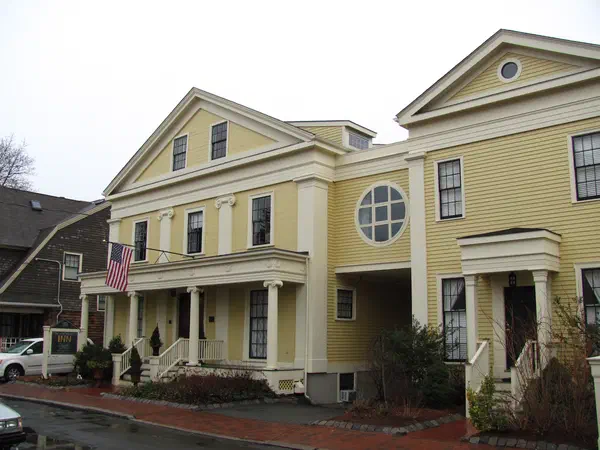
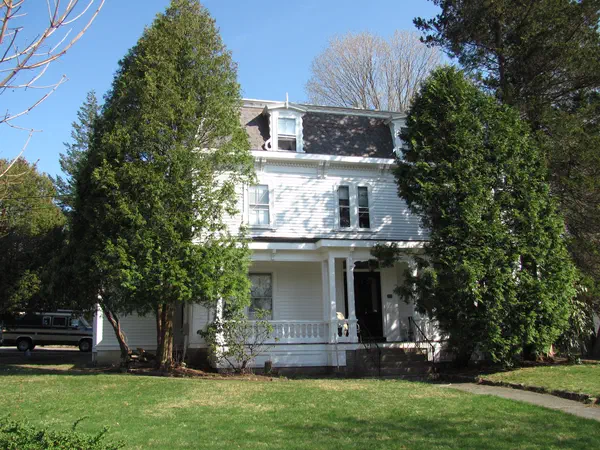
The Italianate (1840–1890) replaced Greek Revival's austerity with Mediterranean villa motifs — towers, bracketed eaves, paired round-arched windows. The South End and Back Bay are paved in them.
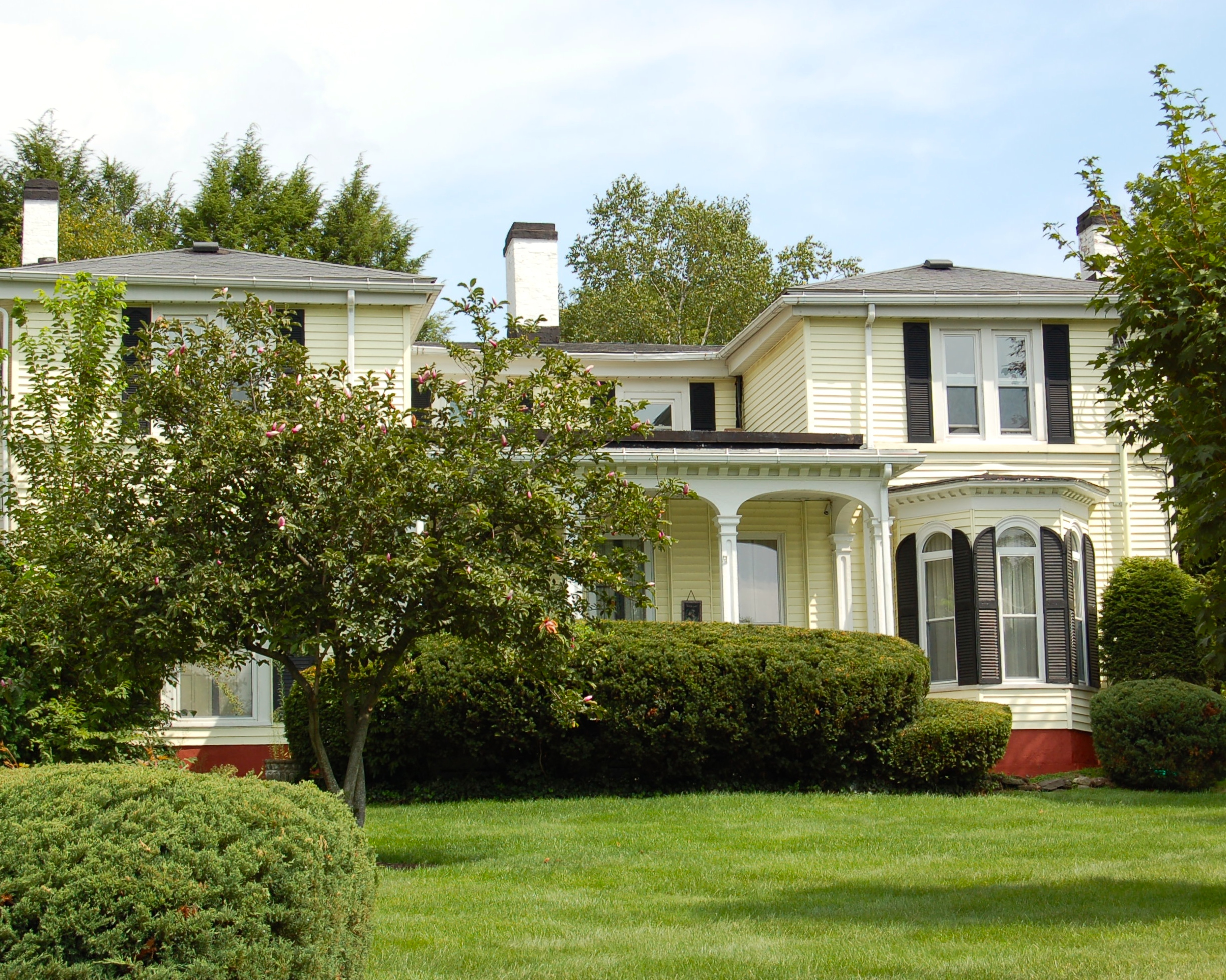
What is an Italianate?
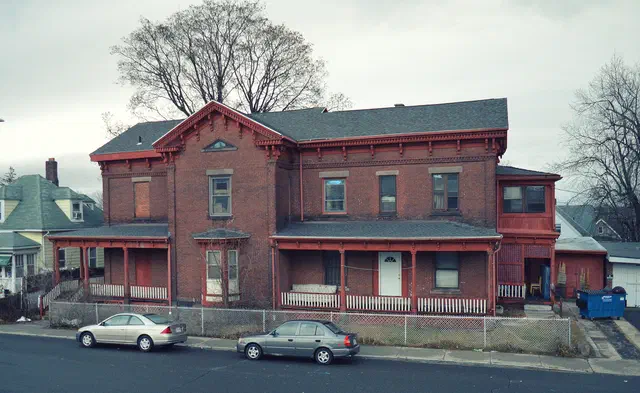
The Italianate is the romantic city house of the Victorian era, built across Massachusetts from about 1840 to 1890. Picture an Italian country villa on a New England street: tall arched windows, a low roof, deep eaves trimmed with carved wooden brackets, and sometimes a small cupola on top. The boom years ran through the 1850s to 1870s, when new mill and railroad money wanted handsome houses.
Why it’s special
The Italianate arrived as the country tired of the plain, columned Greek Revival. Pattern books by Andrew Jackson Downing (1842 and 1850) sold the idea of a house that feels like a villa in the Italian hills. The signature is the bracket: pairs of carved scrolls holding up wide, shady eaves. Windows are tall and narrow, often arched and set in pairs, and on the grandest houses a square tower or cupola rises from the center. New steam-powered saws made the trim affordable, so for one generation ordinary families could own a house that looked like a small palace.
What it’s like to live in one
These houses are built for height and light, with tall ceilings, long windows, and gracious rooms. In Massachusetts they cluster in the cities. Boston’s South End is the country’s largest Victorian brownstone neighborhood, full of bay-fronted rows from 1855 to 1875, and the mill cities of Worcester and Fall River hold the most ornate examples. Going in, budget for upkeep: brownstone fronts crumble, the carved brackets need care, and many original cupolas were removed when roofs leaked.
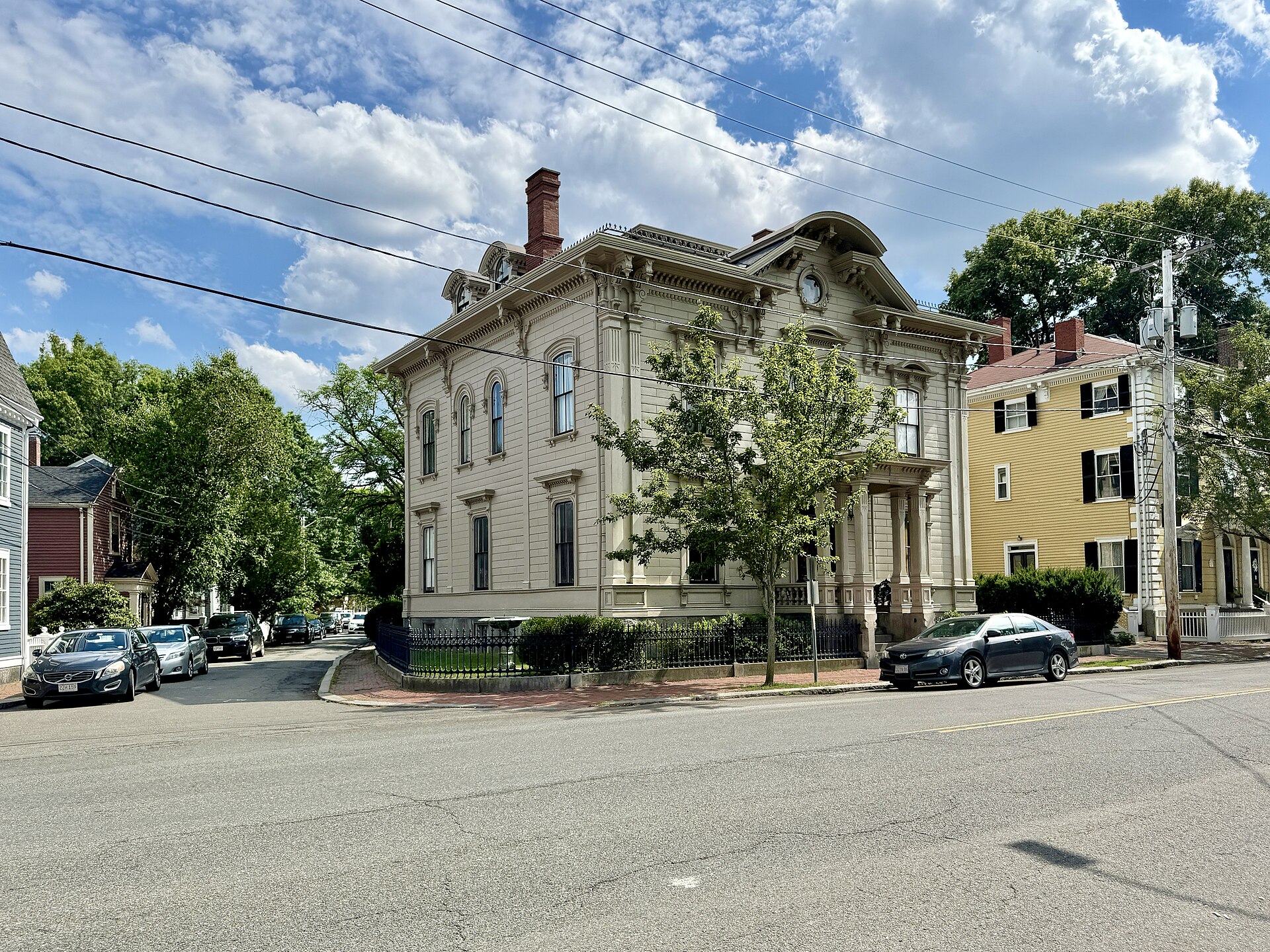
Is it the real thing?
A genuine Italianate dates roughly 1840 to 1890, and the brackets give it away: paired scrolls under deep eaves, tall arched windows, a low roof. The closest look-alike is the Second Empire, which shares the brackets but wears a steep mansard roof. This site files a house as Second Empire when the mansard is the star, and as Italianate when the roof stays low.
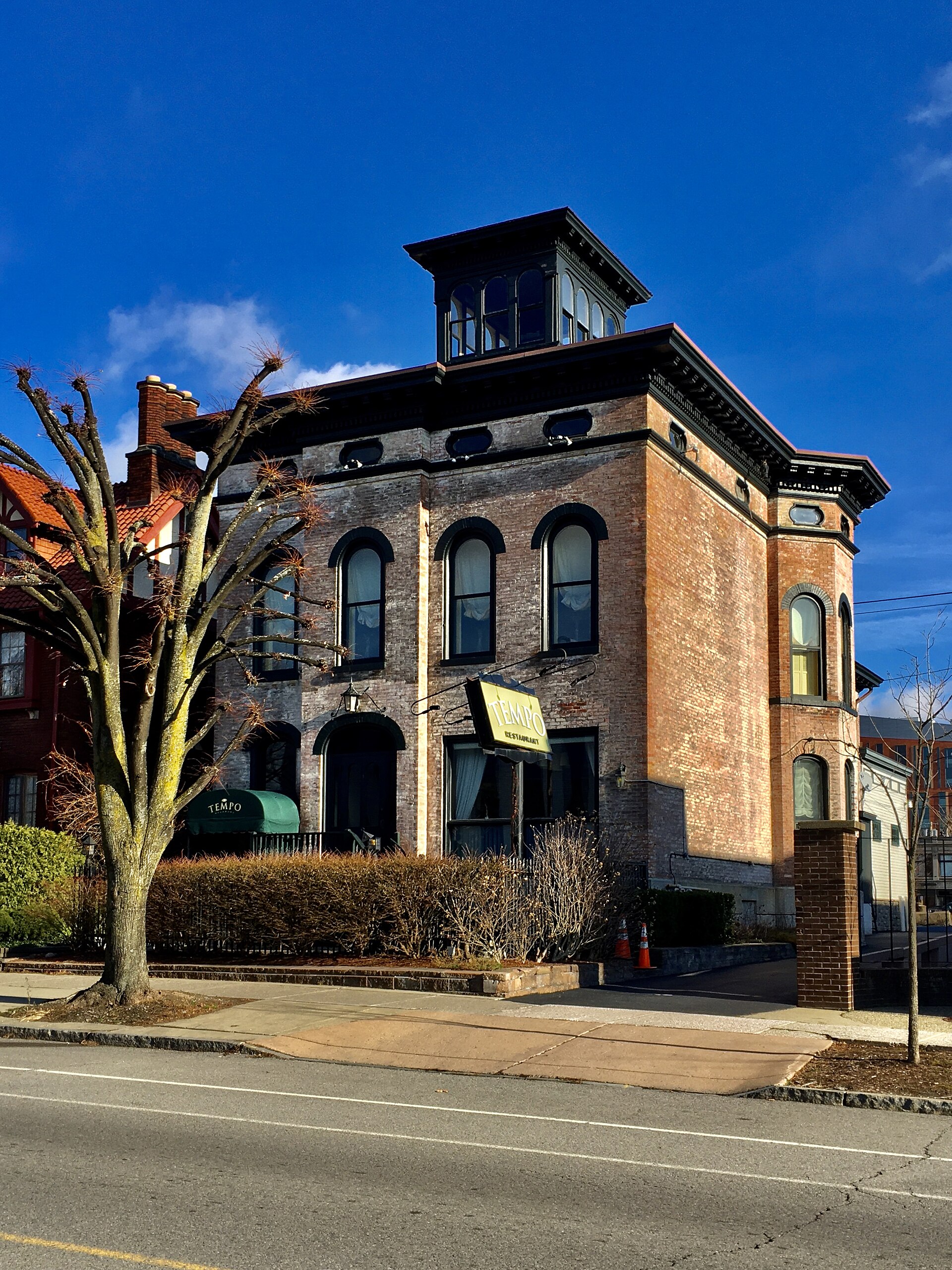
Boston has two Italianate neighborhoods dense enough to merit their own pages: the South End Italianate brownstone rows, and the grander Back Bay Brownstone houses on filled land. When a build date matters, the state’s historic inventory (MACRIS) is the place to confirm a house’s age.
Last reviewed
Common questions about Italianate homes
How do you identify a Italianate home?
- Wide overhanging eaves held up by decorative paired brackets
- Tall narrow windows with round-arched or flat tops, often in pairs
- Low roof, sometimes topped by a small cupola or lookout
- Heavy, detailed trim along the roofline
- Double front doors with arched glass panels
When were Italianate homes built?
Italianate homes were built during 1840–1890.
Where in Massachusetts are Italianate homes found?
- Boston — South End, Bay Village, Roxbury, Dorchester, Jamaica Plain
- Worcester, Springfield, Lowell — industrial cities at their 1860s–70s peak
- Fall River, New Bedford, Lawrence — textile-mill owner mansions
Who designed notable Italianate homes in Massachusetts?
- Andrew Jackson Downing (1815–1852) — pattern-book popularizer; "Cottage Residences" (1842) and "The Architecture of Country Houses" (1850) spread the style
- Alexander Jackson Davis (1803–1892) — designed early high-style Italianate villas for the Hudson Valley and influenced MA examples
- Henry Hobson Richardson (1838–1886) — built in the Italianate idiom early in his MA career before pivoting to Romanesque
- Calvert Vaux (1824–1895) — Downing's English-born partner; pattern-book successor
- Snell & Gregerson — Boston firm responsible for many South End and Back Bay Italianate rowhouses
- Local Boston brownstone builders working from published plans: William Washburn, Nathaniel J. Bradlee
Current listings (63)
For Sale
$3,495,000
103 West Springfield Street
Boston
4 bds | 3.5 ba | 3,132 sqft | Built 1856
MLS ID #73532800, Sprogis & Neale Real Estate
For Sale
$384,500
174 Hamilton St
Southbridge
4 bds | 3 ba | 3,074 sqft | Built 1900
MLS ID #73532760, Nicholas Reuter
Under Contract
$350,000
70 Washington St
Easton
4 bds | 1.5 ba | 1,365 sqft | Built 1901
MLS ID #73533402, Multi State Realty, Inc.
For Sale
$8,995,000
158 W Canton St
Boston
5 bds | 5.5 ba | 4,133 sqft | Built 1890
MLS ID #73485860, Coldwell Banker Realty - Boston
For Sale
$2,999,000
16 Chestnut Street
Boston
4 bds | 3.5 ba | 3,446 sqft | Built 1860
MLS ID #73512592, RE/MAX Encore
For Sale
$445,000
11 High St
West Brookfield
3 bds | 2 ba | 1,840 sqft | Built 1832
MLS ID #73534551, Keller Williams Pinnacle Central
Under Contract
$829,000
34 Spring Hill Rd
Boston
4 bds | 2.5 ba | 1,962 sqft | Built 1910
MLS ID #73532636, Boston Peak Real Estate
For Sale
$467,798
56 Cherry St
Spencer
5 bds | 2 ba | 2,229 sqft | Built 1850
MLS ID #73531233, Century 21 North East
For Sale
$400,000
34 Lincoln Street
Millville
3 bds | 1 ba | 2,530 sqft | Built 1889
MLS ID #73521883, Kimball Property Realty Inc.
For Sale
$439,000
90 Walden St
New Bedford
3 bds | 1.5 ba | 1,754 sqft | Built 1856
MLS ID #73523514, Amaral & Associates RE
For Sale
$645,000
56 Mendon St
Blackstone
5 bds | 3 ba | 3,268 sqft | Built 1880
MLS ID #73534284, Redfin Corp.
For Sale
$511,111
6 Wheelock St
Oxford
3 bds | 2 ba | 1,756 sqft | Built 1905
MLS ID #73527001, Real Broker MA, LLC
For Sale
$1,045,000
4 Olive Street
Newburyport
3 bds | 1.5 ba | 1,407 sqft | Built 1880
MLS ID #73517096, JD Advisors, Inc
For Sale
$1,429,000
23 Ward St
Woburn
4 bds | 3.5 ba | 4,020 sqft | Built 1880
MLS ID #73493236, Churchill Properties
For Sale
$524,500
14 Highland Ave
Fitchburg
5 bds | 4.5 ba | 3,200 sqft | Built 1900
MLS ID #73532746, Keller Williams Realty North Central
For Sale
$4,295,000
14 Winthrop St
Newton
7 bds | 5 ba | 7,810 sqft | Built 1880
MLS ID #73532720, Compass
For Sale
$700,000
2R Dearborn
Salem
3 bds | 2.5 ba | 1,620 sqft | Built 1850
MLS ID #73533528, Coldwell Banker Realty - Cambridge
Under Contract
$679,000
11 Blake St
Westborough
3 bds | 1.5 ba | 2,002 sqft | Built 1882
MLS ID #73529827, Summit Residential
For Sale
$1,450,000
20 Winter St
Salem
4 bds | 2.5 ba | 3,417 sqft | Built 1878
MLS ID #73529040, The Proper Nest Real Estate
For Sale
$2,595,000
283 Walnut Street
Wellesley
4 bds | 3.5 ba | 4,201 sqft | Built 1874
MLS ID #73529519, Coldwell Banker Realty - Wellesley
For Sale
$779,000
32 Kirby St
Marlborough
4 bds | 2 ba | 2,501 sqft | Built 1900
MLS ID #73529629, Coldwell Banker Realty - Boston
For Sale
$589,000
337 Union St
New Bedford
6 bds | 2 ba | 3,587 sqft | Built 1880
MLS ID #73530827, Keller Williams Elite
For Sale
$850,000
40 Whately Glen Road
Conway
4 bds | 2 ba | 2,838 sqft | Built 1800
MLS ID #73531191, Coldwell Banker Community REALTORS®
Under Contract
$2,700,000
51 Chestnut Street
Boston
4 bds | 3.5 ba | 3,593 sqft | Built 1865
MLS ID #73532468, Gibson Sotheby's International Realty
For Sale
$1,195,000
8 Bolton Pl
Boston
2 bds | 1 ba | 884 sqft | Built 1850
MLS ID #73529842, Compass
Under Contract
$1,299,900
1547 Main St
Concord
5 bds | 2 ba | 2,520 sqft | Built 1862
MLS ID #73526354, Lyv Realty
For Sale
$989,900
17 Tufts Avenue
Everett
4 bds | 3 ba | 3,202 sqft | Built 1880
MLS ID #73526405, Keller Williams Realty-Merrimack
For Sale
$8,250,000
189 W Brookline St
Boston
6 bds | 5 ba | 4,320 sqft | Built 2021
MLS ID #73525666, Coldwell Banker Realty - Boston
Under Contract
$849,900
7 1/2 Pleasant St
Salem
4 bds | 2.5 ba | 1,845 sqft | Built 1880
MLS ID #73528020, Lyv Realty
For Sale
$659,000
8 May St
Beverly
2 bds | 2 ba | 1,200 sqft | Built 1900
MLS ID #73526510, Simply Sell Realty
Under Contract
$1,299,900
191 Cross Rd
Lunenburg
4 bds | 2 ba | 4,081 sqft | Built 1857
MLS ID #73523672, Coldwell Banker Realty - Leominster
Under Contract
$749,000
345 Sherman St
Canton
3 bds | 2 ba | 1,771 sqft | Built 1900
MLS ID #73525080, Property Navigator
For Sale
$2,779,000
419 Main Street
Boston
5 bds | 3.5 ba | 3,300 sqft | Built 1880
MLS ID #73524832, Coldwell Banker Realty - Boston
Under Contract
$689,000
48 Kilby Street
Woburn
3 bds | 1 ba | 1,669 sqft | Built 1860
MLS ID #73522599, Lamacchia Realty, Inc.
For Sale
$2,150,000
20 Maple Street
Lexington
5 bds | 3.5 ba | 4,382 sqft | Built 1860
MLS ID #73518158, Barrett Sotheby's International Realty
For Sale
$1,899,000
275 S Main St
Andover
5 bds | 2.5 ba | 4,608 sqft | Built 1890
MLS ID #73517526, Compass
For Sale
$729,999
31 Central Ave
Medford
3 bds | 2 ba | 1,712 sqft | Built 1890
MLS ID #73517469, Cameron Real Estate Group
For Sale
$1,225,000
53 Lake Street
Winchester
3 bds | 2.5 ba | 2,235 sqft | Built 1864
MLS ID #73519082, Compass
For Sale
$1,300,000
14 South St
Grafton
5 bds | 3.5 ba | 4,536 sqft | Built 1850
MLS ID #73512227, Petraglia Real Estate Services
For Sale
$209,000
29 W Main St
Orange
0 ba | 2,404 sqft | Built 1900
MLS ID #73516356, LAER Realty Partners
For Sale
$869,900
43 Plymouth
Holbrook
4 bds | 4 ba | 4,674 sqft | Built 1889
MLS ID #73516984, LPT Realty, LLC
For Sale
$2,925,000
1949 Massachusetts Ave
Lexington
8 bds | 2.5 ba | 4,101 sqft | Built 1850
MLS ID #73507044, W. H. Lyon, Inc. REALTORS®
For Sale
$799,900
4 Langsford St
Gloucester
2 bds | 1.5 ba | 1,321 sqft | Built 1870
MLS ID #73510157, Churchill Properties
For Sale
$1,049,000
92 Dudley St
Medford
5 bds | 2 ba | 2,155 sqft | Built 1890
MLS ID #73507486, Welcome Home Properties, Inc.
For Sale
$274,995
1030 Worthington St
Springfield
5 bds | 2.5 ba | 4,770 sqft | Built 1850
MLS ID #73497506, Naples Realty Group
For Sale
$2,990,000
12 Auburn St
Boston
3 bds | 3.5 ba | 3,360 sqft | Built 1880
MLS ID #73504174, Serhant
For Sale
$1,239,000
642 Worcester St
Wellesley
3 bds | 2.5 ba | 3,129 sqft | Built 1854
MLS ID #73503725, Rutledge Properties
For Sale
$8,100,000
79 Pinckney
Boston
5 bds | 5.5 ba | 4,810 sqft | Built 1830
MLS ID #73499862, Brewster & Berkowitz R. E.
For Sale
$1,890,000
154 Main ST
Andover
3 bds | 2.5 ba | 2,945 sqft | Built 1860
MLS ID #73484030, D&W Real Estate LLC
For Sale
$390,000
19 Chapel St
Warren
5 bds | 2 ba | 1,920 sqft | Built 1900
MLS ID #73495365, Keller Williams Pinnacle Central
For Sale
$2,895,000
274 Bunker Hill Street
Boston
4 bds | 3.5 ba | 2,807 sqft | Built 1853
MLS ID #73485338, Gibson Sotheby's International Realty
For Sale
$3,995,000
48 Appleton
Boston
4 bds | 3.5 ba | 3,600 sqft | Built 1890
MLS ID #73482506, Compass
For Sale
$4,585,000
70 Montgomery St
Boston
4 bds | 3.5 ba | 3,288 sqft | Built 1860
MLS ID #73495146, Rondeau/Tierney Real Estate, LLC
For Sale
$950,000
12 Forest St
Boston
4 bds | 1.5 ba | 1,774 sqft | Built 1890
MLS ID #73474445, NextGen Realty, Inc.
For Sale
$550,000
12 Franklin St
Weymouth
3 bds | 1 ba | 1,530 sqft | Built 1868
MLS ID #73464525, RE/MAX Synergy
For Sale
$579,000
20 South St
Plainville
2 bds | 2 ba | 1,918 sqft | Built 1852
MLS ID #73466291, Lamacchia Realty, Inc.
For Sale
$2,495,000
23 Centre Ave
Belmont
7 bds | 4.5 ba | 5,012 sqft | Built 1861
MLS ID #73381529, Coldwell Banker Realty - Belmont
Under Contract
$1,899,000
24 Pine Island Rd
Mattapoisett
4 bds | 3.5 ba | 3,568 sqft | Built 1870
MLS ID #73474383, Century 21 North East Homes
For Sale
$3,800,000
269 Franklin St
Newton
6 bds | 3 ba | 5,945 sqft | Built 1850
MLS ID #73476834, Coldwell Banker Realty - Wellesley
For Sale
$2,850,000
5 Dartmouth Pl
Boston
4 bds | 4 ba | 1,992 sqft | Built 1900
MLS ID #73472078, South End Realty Group
For Sale
$12,900,000
55-57 Hancock St
Boston
5 bds | 6.5 ba | 7,777 sqft | Built 1876
MLS ID #73473428, Olde Forge Realty
Sold
$750,000
5 Pickard St
Amesbury
3 bds | 1.5 ba | 1,742 sqft | Built 1850
MLS ID #73513352, Gibson Sotheby's International Realty
Sold
$675,000
60 Warren Street
Newburyport
2 bds | 1.5 ba | 1,430 sqft | Built 1850
MLS ID #73513400, RE/MAX Bentley's