Unique Homes MA
Beacon Hill Federal Bowfront Homes
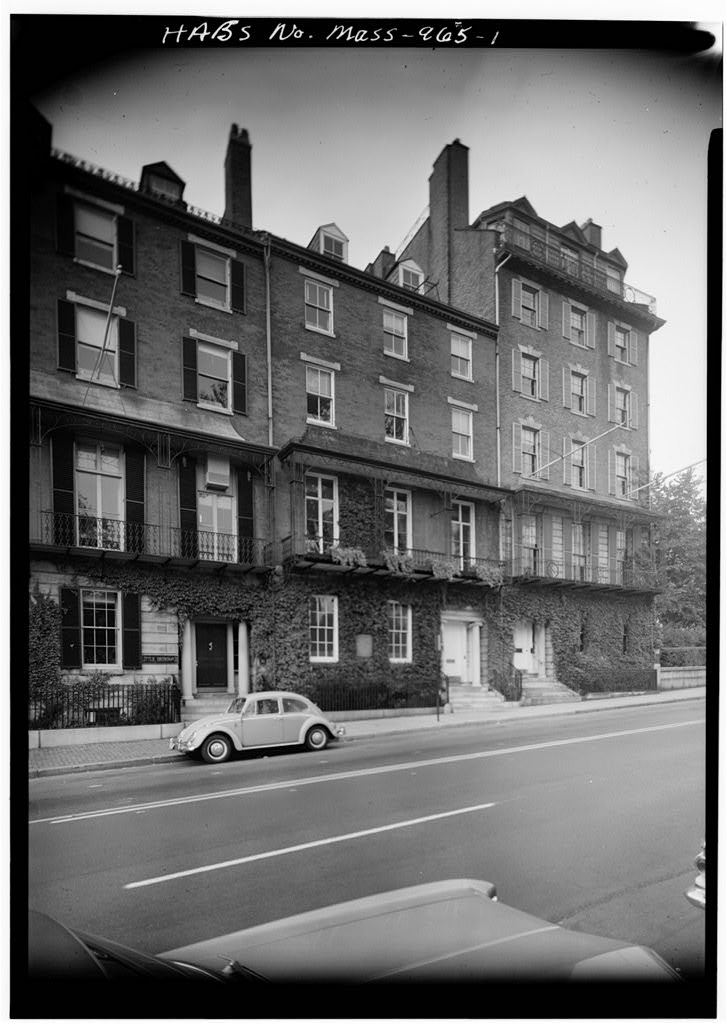
The Beacon Hill Federal bowfront (1800-1840) is Boston's most iconic urban rowhouse — a curved bay window facing a brick-paved street, with refined Federal detailing on a narrow city lot.
What is a Beacon Hill Federal rowhouse?
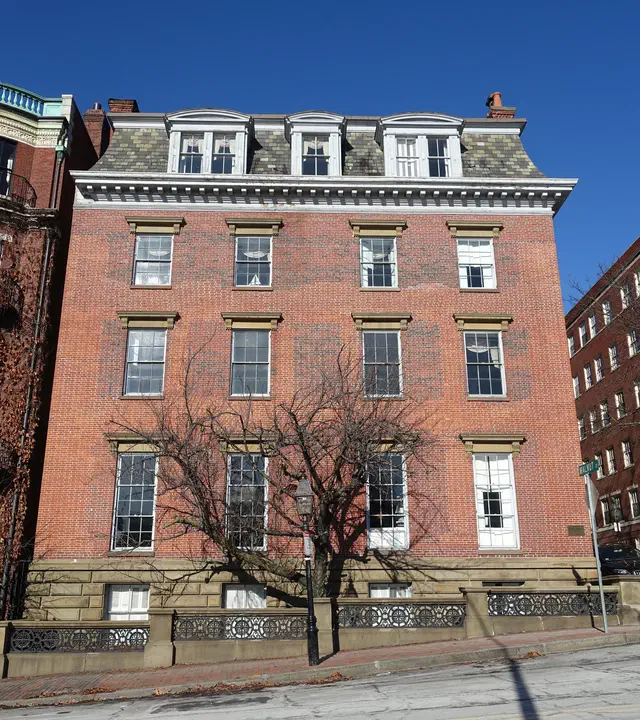
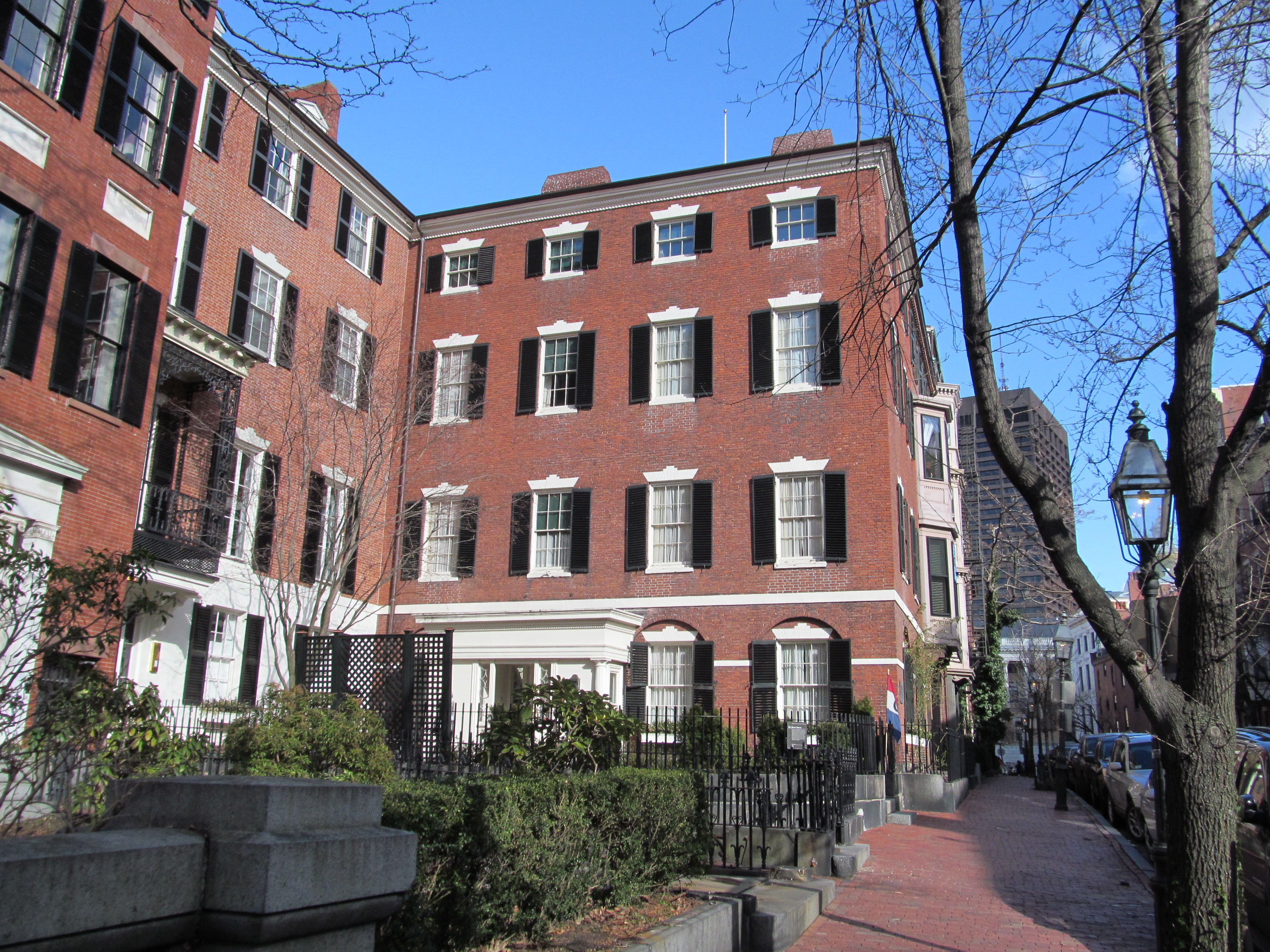
These are the brick townhouses that line Boston’s Beacon Hill, built mostly between 1800 and 1840. Each shares its side walls, so a whole block reads as one long brick wall broken into elegant fronts. Many have a gently curved front bay, the bowfront. This is Federal architecture at its most refined. Beacon Hill grew right after the Revolution, when Boston’s merchant families wanted addresses to match their fortunes. Charles Bulfinch laid out the model on Mount Vernon, Chestnut, and Beacon Streets, and most of those houses still stand.
Why it’s special
A Beacon Hill Federal is quiet outside and rich in the details. The front is flat red brick with white-painted stone trim, and the hidden roof leaves the house reading as a clean rectangle with the bow as its one flourish. The feature everyone photographs is the front door, up a few stone steps and crowned by a fan-shaped window. Beacon Hill kept its brick sidewalks and gas lamps, and the streets still glow at dusk.
What it’s like to live in one
Most of these houses were divided into condos, so you might own a floor or two rather than the whole building, though a few still trade as single rowhouses at the top of the market. Either way you get tall windows, high ceilings, and an address people know by name, with the Common, Charles Street, and the train minutes on foot. The houses are two centuries old, so plan for steady upkeep, and expect any exterior change to clear the Beacon Hill Architectural Commission. Up the coast, Newburyport has the same bowed fronts standing free on their lots.
Is it the real thing?
A true Beacon Hill Federal is an early-1800s brick rowhouse with the curved bow, the fanlight over a recessed door, and the flat brick front that hides its roof. Its successor, the Greek Revival rowhouse of the 1830s and 40s, drops the curve for a flat front and a heavier, columned entrance. If the front bows and the door wears a fan, it is the Federal type. To classify a house here, we look for an early-1800s build date and an address inside the historic district, confirmed against the state inventory (MACRIS).
Last reviewed
Common questions about Beacon Hill Federal homes
How do you identify a Beacon Hill Federal home?
- Narrow brick rowhouse sharing walls with its neighbors
- Curved (bowed) front bay window, the signature 'bowfront'
- Red-brick front with white-painted stone or marble trim
- Recessed front door reached by a few stone steps from the sidewalk
- Fan-shaped window above the door, with narrow windows to either side
When were Beacon Hill Federal homes built?
Beacon Hill Federal homes were built during 1800–1840.
Where in Massachusetts are Beacon Hill Federal homes found?
- Beacon Hill (Boston) — the densest concentration; the south slope is the canonical district
- Bay Village (Boston) — smaller cluster of similar federal rowhouses, 1820s-30s
- Newburyport — High Street has freestanding (not rowhouse) Federal bowfront variants
Who designed notable Beacon Hill Federal homes in Massachusetts?
- Charles Bulfinch — designed the model rowhouses on Park Street, Bowdoin Square, and the Tontine Crescent (now demolished)
- Asher Benjamin — published pattern books that propagated the style
- Alexander Parris — later transitional examples bridging into Greek Revival