 Unique Homes MA
Arts & Crafts Homes in Massachusetts
The Arts and Crafts movement (c. 1890–1920) reformed design against Victorian excess and machine production, prizing handcraft, honest natural materials, and harmony with the landscape. In Massachusetts houses it runs from the architect-designed Craftsman and the everyday bungalow to Arts & Crafts–inflected Colonials, and is still invoked by builders today.
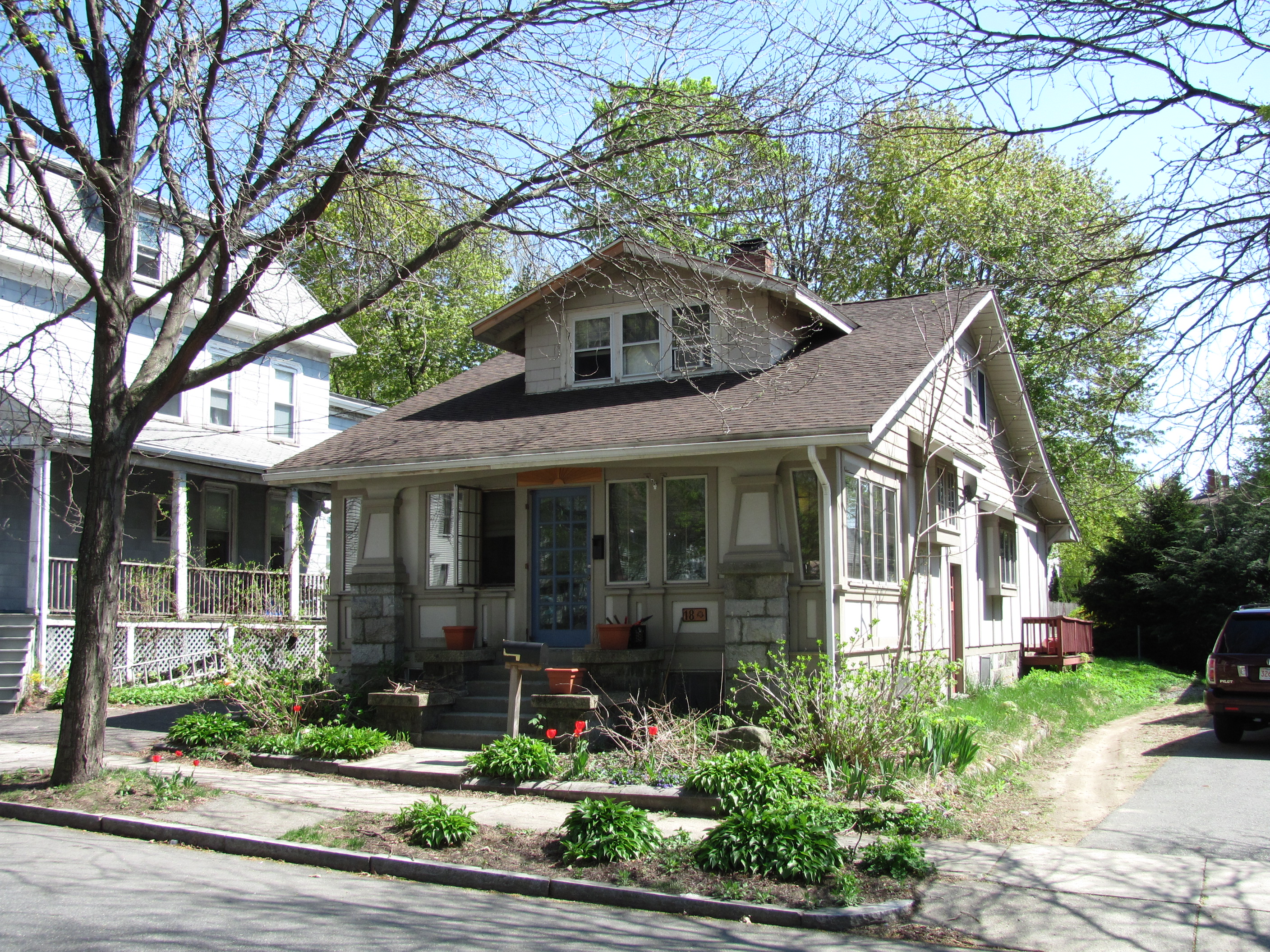
What is an Arts and Crafts home?
Arts and Crafts is a family of homes built between about 1890 and 1920, when designers pushed back against the busy, machine-made look of the Victorian house. They wanted homes made by hand, from real materials, in simple and sturdy shapes. The result is a warm, grounded house that still feels honest today. It is a family, not a single floor plan. The Craftsman house and the everyday Bungalow both belong to it, and the same spirit shaped Arts and Crafts Colonials. Builders still reach for the name, so you will see it on new construction too.
Why it’s special
The idea was to show the house for what it is. Wood is left as wood, brick as brick, stone as stone. Where a Victorian builder added store-bought ornament, an Arts and Crafts builder kept things plain and let good materials and workmanship do the talking. Inside, the house gathers around the fireplace and the garden. The hearth anchors the main rooms, often framed by built-in bookcases, window seats, and cabinets. Deep covered porches and long low rooflines reach toward the yard. Stained glass, small-paned windows, and handmade metal hardware add the few quiet flourishes.
What it’s like to live in one
These homes feel solid and calm. The built-ins do real work, and the natural wood gives rooms a warm glow paint cannot copy. In Massachusetts they cluster in the streetcar suburbs and mill cities of those decades. Newton and the towns just west of Boston (Arlington, Belmont, Watertown) have many, as do the West Side, Greendale, and Tatnuck neighborhoods of Worcester and the streetcar districts of Springfield, Holyoke, and Pittsfield. These houses are roughly a century old, so plan for the usual updates to heating, wiring, and plumbing.
Is it the real thing?
The name is used loosely, so it helps to know what you are looking at. A true Arts and Crafts home comes from that 1890 to 1920 window and shows the honest materials, exposed wood, built-in hearth, and deep porches described above. A newer house may borrow the name and a few details without the age or the handwork. We surface a home here only when the listing makes a real “Arts and Crafts” claim about the architecture, not the hobby meaning of the phrase.
Last reviewed
Common questions about Arts and Crafts homes
How do you identify a Arts and Crafts home?
- Natural materials left to show themselves: dark stained wood, brick, stone, stucco, and shingle
- Warm wood beams and trim left exposed inside
- Built-in bookcases, window seats, and cabinets around a central fireplace
- Stained-glass or small-paned windows and hand-made metal hardware
- Long, low rooflines with deep covered porches
When were Arts and Crafts homes built?
Arts and Crafts homes were built during 1890–1920.
Where in Massachusetts are Arts and Crafts homes found?
- Newton and the Boston streetcar suburbs (Arlington, Belmont, Watertown)
- Worcester West Side, Greendale, and Tatnuck
- Springfield, Holyoke, and Pittsfield streetcar neighborhoods
Who designed notable Arts and Crafts homes in Massachusetts?
- Gustav Stickley — The Craftsman magazine (1901–1916) and mail-order plans that carried the movement nationwide
- Greene & Greene — the canonical high-style American Arts & Crafts house, widely emulated
- H. H. Richardson — Massachusetts forerunner whose materials-first work fed the movement
- Lois Lilley Howe and the Boston Society of Arts and Crafts (founded 1897, the first in the U.S.)
Current listings (14)
For Sale
$1,589,900
27 Richwood St
Boston
4 bds | 2.5 ba | 2,412 sqft | Built 1900
MLS ID #73489379, William Raveis R. E. & Home Services
For SaleAladdin Homes
$700,000
34 Washington
Bourne
3 bds | 2 ba | 1,622 sqft | Built 1920
MLS ID #73438694, Sotheby's International Realty
For Sale
$2,575,000
5 Walnut Street
Lexington
5 bds | 5 ba | 5,198 sqft | Built 2006
MLS ID #73513713, Barrett Sotheby's International Realty
For Sale
$2,050,000
250 Meadowbrook Road
Dedham
5 bds | 5.5 ba | 5,728 sqft | Built 2005
MLS ID #73499697, Coldwell Banker Realty - Westwood
For Sale
$4,295,000
53 Raymond Street
Manchester
4 bds | 3 ba | 4,583 sqft | Built 1928
MLS ID #73488928, LandVest, Inc., Manchester -by-the-Sea
For Sale
$2,500,000
42 Temple Road
Wellesley
4 bds | 3 ba | 2,998 sqft | Built 1951
MLS ID #73533506, Paula Carens
Under Contract
$1,875,000
16 Russell Avenue
Watertown
5 bds | 2 ba | 3,679 sqft | Built 1907
MLS ID #73530152, Compass
Under Contract
$465,000
53 Hillcroft Ave
Worcester
2 bds | 1.5 ba | 1,650 sqft | Built 1920
MLS ID #73530741, Realty Executives Boston West
For Sale
$1,998,000
90 Hull St
Newton
6 bds | 3.5 ba | 3,137 sqft | Built 1916
MLS ID #73518711, Coldwell Banker Realty - Newton
For Sale
$3,495,000
20 Wheeler Ln
Natick
5 bds | 5.5 ba | 6,280 sqft | Built 1880
MLS ID #73499020, Coldwell Banker Realty - Boston
For Sale
$3,849,000
34 Pilgrim Rd
Newton
6 bds | 4.5 ba | 5,763 sqft | Built 1907
MLS ID #73496870, Hammond Residential Real Estate
For Sale
$3,995,000
55 Penniman Rd
Brookline
4 bds | 3 ba | 4,320 sqft | Built 1922
MLS ID #73486005, MGS Group Real Estate LTD
Sold
$1,505,000
431 Main St
Hingham
4 bds | 3 ba | 2,750 sqft | Built 1925
MLS ID #73516064, Coldwell Banker Realty - Hingham
Sold
$285,000
31 Trinity Ter
Springfield
5 bds | 2.5 ba | 2,583 sqft | Built 1914
MLS ID #73491379, Swallow Real Estate, Inc.