Unique Homes MA
American Foursquare Homes in Massachusetts
The American Foursquare (1895-1930) is the no-nonsense answer to the late-Victorian — a square box on a square plan with a hipped roof, full porch, and four big rooms per floor.
What is an American Foursquare?
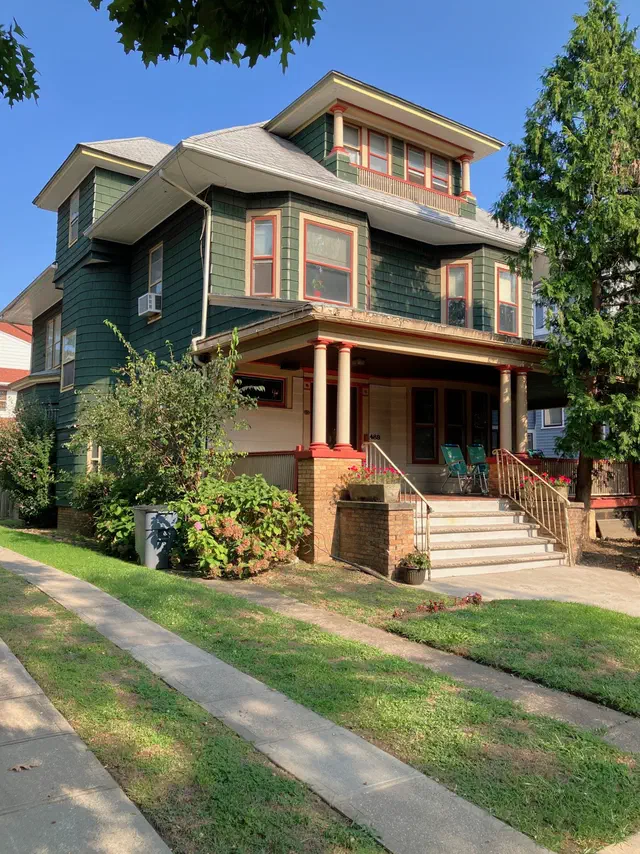
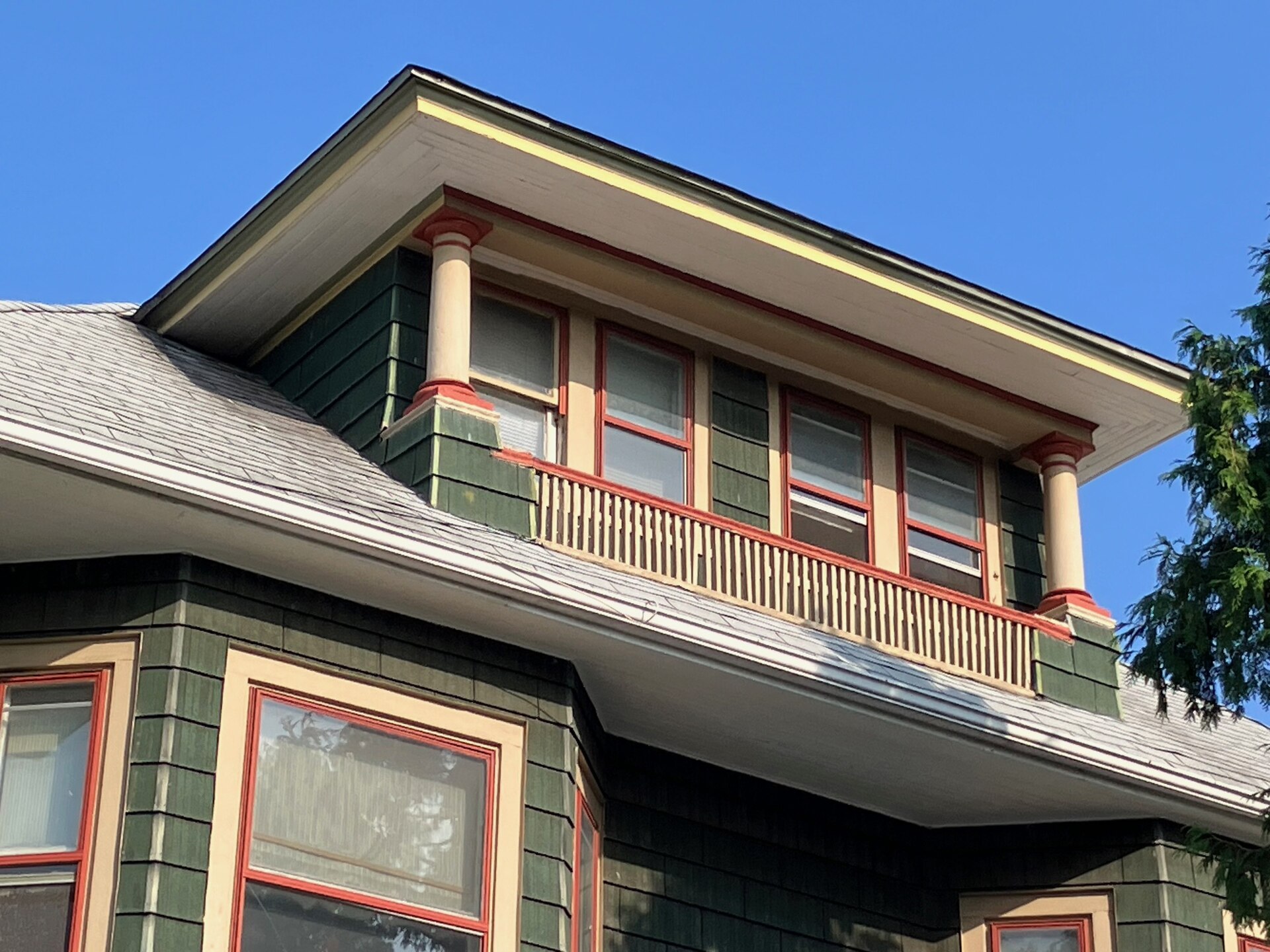
The Foursquare is the tall, square house you have seen on a hundred old neighborhood streets: two and a half stories, a low pyramid roof with a single front dormer, and a wide porch across the whole face. The name comes from the floor plan, four roughly equal rooms per floor around a central staircase. Builders put them up across Massachusetts from about 1895 to 1930. Some wear simple Colonial trim, others wear Craftsman touches like exposed roof beams.
Why it’s special
The Foursquare was the cure for the fussy Victorian. The square plan fits the most living space inside the simplest walls, so a family got four real bedrooms upstairs and a full living room, dining room, and kitchen below for a sensible price on a modest lot. That value made it the people’s house. Many were ordered from a catalog: between 1908 and 1930, Sears, Aladdin, and Gordon-Van Tine shipped Foursquares as kits by rail for a local carpenter to assemble. A documented kit in original shape is a genuine find today.

What it’s like to live in one
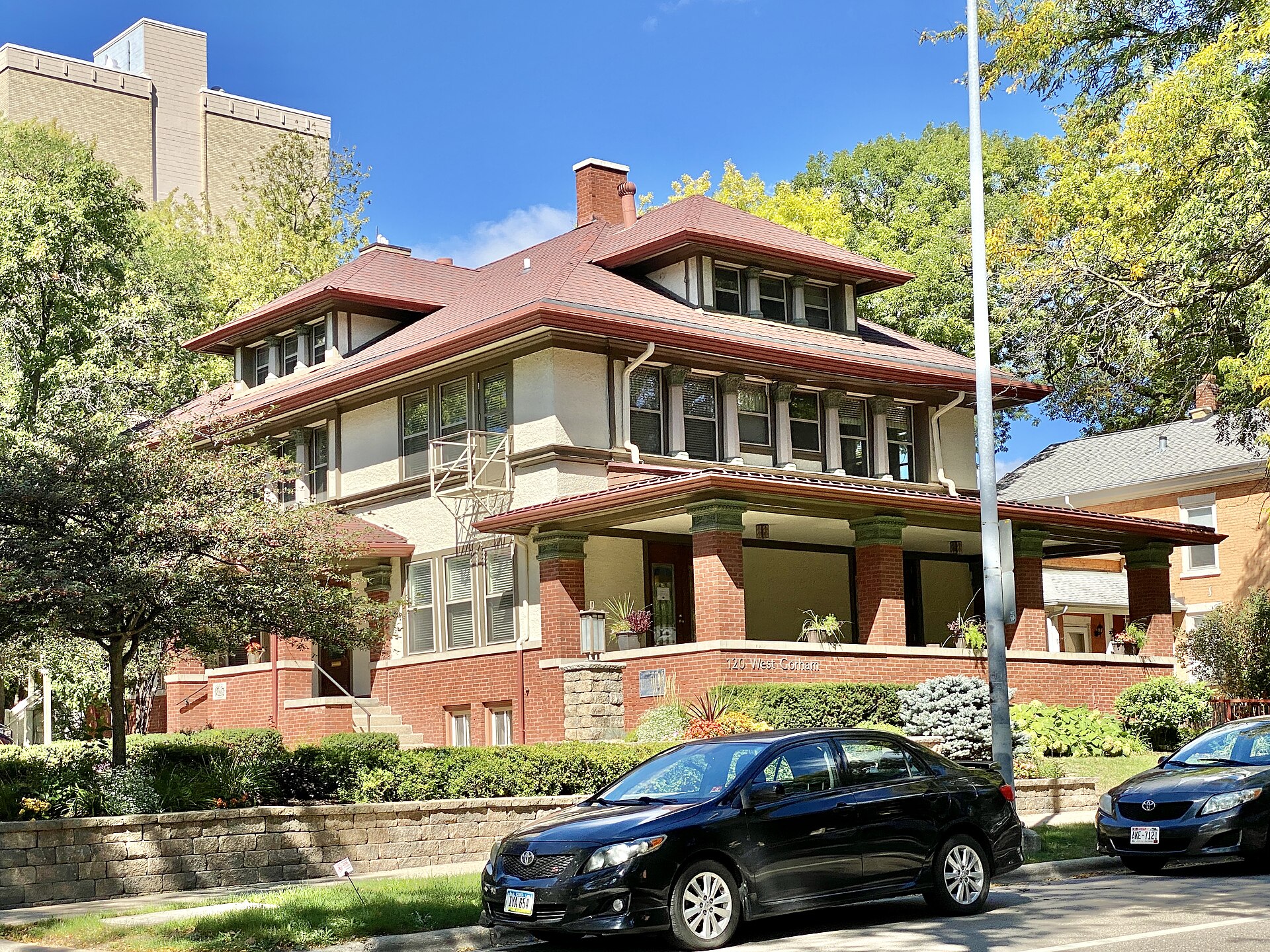
Foursquares feel roomy. Ceilings are tall, rooms are generous, and the windows let in light. The dining room often has a built-in buffet and glass-front cabinets, and the front porch is a place to watch the street. In Massachusetts they cluster in the old working- and middle-class cities. Worcester has the most by far, with whole blocks on the West Side, in Greendale, and in Burncoat. Springfield, Holyoke, Lowell, Fall River, and New Bedford all have Foursquare neighborhoods, and scattered ones turn up closer to Boston in Watertown, Arlington, and Newton Highlands. Most are a century old, so original wood windows and stained-glass accents are worth protecting.
Is it the real thing?
The true Foursquare is easy to spot: the tall square box, the pyramid roof with its one front dormer, the full-width porch, and four rooms to a floor. Watch for the Bungalow, the low one-story cousin from the same years; a Foursquare stands up, a Bungalow spreads out. You will also see Foursquares wearing Colonial Revival trim. We classify by the shape, because the square mass and full porch tell you more than the trim. To confirm a period example, look for a 1895 to 1930 build date with the square form and porch intact.
Last reviewed
Common questions about American Foursquare homes
How do you identify a American Foursquare home?
- A tall, square, two-and-a-half-story box shape
- A low pyramid-shaped roof with one dormer poking out the front
- A wide front porch with square columns
- Four roughly equal rooms on each floor around a central staircase
- A simple, balanced front with a window or two per side
When were American Foursquare homes built?
American Foursquare homes were built during 1895–1930.
Where in Massachusetts are American Foursquare homes found?
- Worcester (West Side, Greendale, Burncoat) — the densest concentration in MA
- Springfield (Forest Park, McKnight), Holyoke, Pittsfield — central- and western-MA streetcar suburbs
- Watertown, Arlington, Belmont, Newton Highlands — inner-ring Boston
Who designed notable American Foursquare homes in Massachusetts?
- Stock plan houses — Sears Modern Homes, Aladdin Company, Gordon-Van Tine, Montgomery Ward sold dozens of Foursquare variants by mail
- Frank Kidder — "Building Construction and Superintendence" (1896) included Foursquare plans widely copied
- Frank Lloyd Wright — his Prairie Foursquare variants (Robie House antecedents) influenced higher-end examples
- Local builder-developers — most MA Foursquares are not architect-designed; the type was built by carpenter-contractors working from stock plans
- Edward Hopper — the painter; his "House by the Railroad" (1925) immortalized the lonely Foursquare on the suburban edge