 Unique Homes MA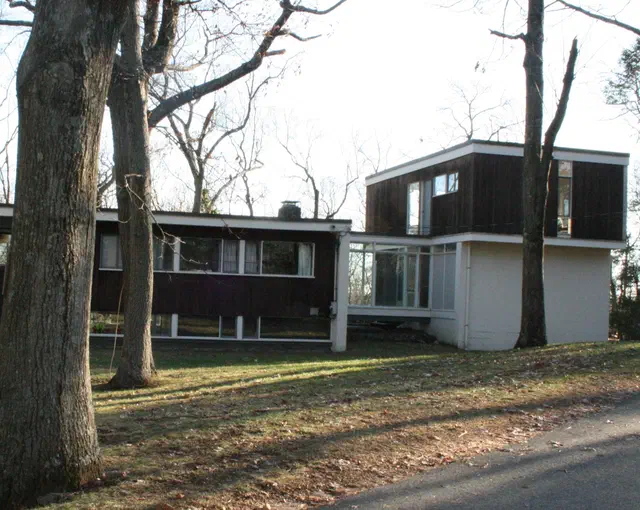
Six Moon Hill
TAC's first and most famous cooperative development.
The Architects Collaborative (TAC)’s first and most famous cooperative development, Six Moon Hill encompasses twenty-eight modernist homes on Moon Hill Road off Pleasant Street, each originally owned by a TAC architect or affiliate. Incorporated in 1947 in Lexington, Six Moon Hill was the founding enclave of Massachusetts Mid-Century Modern housing, and living here means living in that history.
Walter Gropius, formerly director of the Bauhaus, co-founded TAC in 1945 with seven young Harvard Graduate School of Design colleagues: Norman and Jean Fletcher, John and Sarah Harkness, Robert McMillan, Louis McMillen, and Benjamin Thompson. The partners pooled resources to buy 20 acres of orchard on Moon Hill and designed houses for themselves, working through shared deed restrictions that preserved sightlines and a central common. Walk the streets and you read a single architectural conversation: flat roofs, full-height glazing, brick-and-cedar exteriors, and a deliberate refusal of the Colonial Revival vocabulary that dominated Lexington at the time. TAC’s two later cooperatives in town, Five Fields and the smaller Pierce-led work near Peacock Farm, refined the model Six Moon Hill established.
Six Moon Hill was added to the National Register of Historic Places in 2010 as the Six Moon Hill Historic District. The neighborhood remains a private cooperative; its design covenants, original common land, and many of the original homeowners’ families are still in place. For deeper history see Docomomo US on Six Moon Hill and the Lexington Historical Society.
Last reviewed